
Magazin
cikknyelvválasztás
A szerkesztésnél amilyen nyelvet kiválasztassz azon a nyelven fog megjelenni a cikk.


Az Avasi kilátó: Miskolc ikonikus jelképe és modernista remekműve
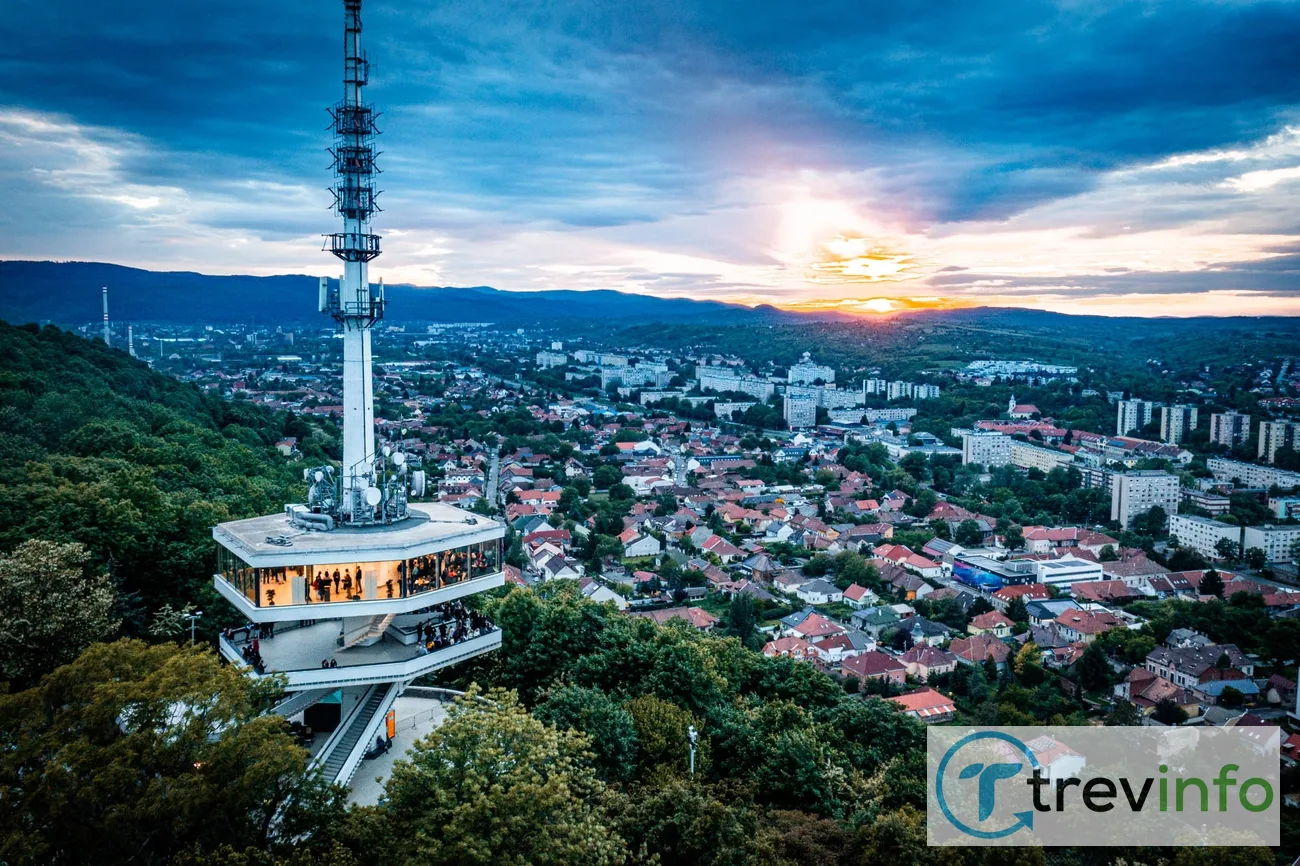
Miskolc szívében, a város fölé magasodó Avas-hegy tetején áll a település talán legismertebb és legmeghatározóbb jelképe, az Avasi kilátó (vagy más néven Avasi tévétorony). Ez a különleges építmény nemcsak kiváló panorámát nyújt a városra és a környező tájra, hanem egyben a magyar modern építészet egyik kiemelkedő darabja is, amely szorosan összefonódott Miskolc identitásával.
A kilátó története és építése
Az Avas-hegyen nem a jelenlegi az első kilátó. Az első, fából készült építményt 1906-ban állították fel II. Rákóczi Ferenc tiszteletére, ám ez alig egy év után összedőlt. 1934-ben Szeghalmy Bálint tervei alapján egy gyönyörű, székely stílusú, fagerendás kilátó épült a helyére, amely a város kedvelt célpontjává vált. Ez a torony azonban tragikus sorsra jutott: 1956-ban, a forradalom idején kigyulladt és teljesen leégett.
A ma is látható, vasbeton szerkezetű tévétornyot és kilátót 1963-ban adták át. A terveket a kétszeres Ybl Miklós-díjas építész, Hofer Miklós és munkatársa, Vass György készítették. Az építkezés mindössze egy évig tartott, és a torony gyorsan a város modernizációjának és újjászületésének szimbólumává vált.
Építészeti stílus és jellemzők
Az Avasi kilátó stílusát tekintve a késő modern építészet és a funkcionalizmus egyik legszebb hazai példája. A 72 méter magas torony kecses, mégis monumentális sziluettje tökéletesen illeszkedik a hegygerinc vonalához. Az építmény alapanyaga elsősorban vasbeton, amely a korszak technológiai fejlődését és esztétikai törekvéseit tükrözi.
A kilátó tágas, nyitott teraszáról, amely 10 méteres magasságban található, lenyűgöző, 360 fokos körpanoráma nyílik Miskolcra, a Bükk-vidék vonulataira, tiszta időben pedig akár a Tokaji-hegyig is el lehet látni. A kilátószint felett helyezkedik el a műsorszóró berendezéseknek helyet adó üvegfalú helyiség, legfelül pedig az antenna magasodik az ég felé.
Izgalmas érdekességek az Avasi kilátóról
- Kilengés a szélben: Bár a torony rendkívül stabil, a fizika törvényeinek megfelelően a legnagyobb viharokban a teteje akár 25 centimétert is kilenghet, ami teljesen biztonságos, szerkezetileg tervezett tulajdonság.
- A jubileumi megújulás: A kilátó fennállásának 60. évfordulójára, 2023-ban teljes körű rekonstrukción esett át. A felújítás során nemcsak szerkezetileg erősítették meg és modernizálták, hanem látványos, programozható LED-es díszkivilágítást is kapott, amely éjszakánként különleges fényárba borítja a tornyot.
- Kulináris élmények a magasban: A kilátóban egy hangulatos kávézó és rendezvénytér is működik, így a látogatók a lenyűgöző panoráma mellett fogyaszthatják el frissítőjüket.
- Történelmi szomszédság: Az Avas nemcsak a kilátóról híres. Közvetlen közelében található a gótikus stílusú, középkori avasi református templom, valamint a híres avasi pincerendszer, ahol több mint 800 történelmi borospince bújik meg a hegyoldalban.
Miért érdemes ellátogatni ide?
Az Avasi kilátó nem csupán egy építészeti műemlék, hanem Miskolc pulzáló kulturális és turisztikai központja. Akár a történelem, akár a modern építészet iránt érdeklődik a látogató, vagy egyszerűen csak a legszebb miskolci panorámát szeretné lefényképezni, a kilátó kihagyhatatlan úti cél. A hegyoldal hangulatos, kanyargós sétányai és a történelmi borpincék világa még emlékezetesebbé teszik az ide tett kirándulást.

Alkategóriák
Malta
Malta Island
With a population of about 475,000[4] over an area of 316 km2 (122 sq mi),
Malta is the world's tenth smallest and fifth most densely populated country. Its capital is Valletta, which is the smallest national capital in the European Union by area at 0.8 km.2 The official languages are Maltese and English, with Maltese officially recognised as the national language and the only Semitic language in the European Union. Malta has been inhabited since approximately 5900 BC. Its location in the centre of the Mediterranean has historically given it great strategic importance as a naval base, with a succession of powers having contested and ruled the islands, including the Phoenicians and Carthaginians, Romans, Greeks, Arabs, Normans, Aragonese, Knights of St. John, French, and British.
Most of these foreign influences have left some sort of mark on the country's ancient culture. Malta became a British colony in 1815, serving as a way station for ships and the headquarters for the British Mediterranean Fleet. It played an important role in the Allied war effort during the Second World War, and was subsequently awarded the George Cross for its bravery in the face of an Axis siege, and the George Cross appears on Malta's national flag.
The British Parliament passed the Malta Independence Act in 1964, giving Malta independence from the United Kingdom as the State of Malta, with Queen Elizabeth II as its head of state and queen. The country became a republic in 1974. It has been a member state of the Commonwealth of Nations and the United Nations since independence, and joined the European Union in 2004; it became part of the eurozone monetary union in 2008.
(Wikipedia)
Mdina
Ancient Melite was larger than present-day Mdina, and it was reduced to its present size during the Byzantine or Arab occupation of Malta. During the latter period, the city adopted its present name, which derives from the Arabic word medina. The city remained the capital of Malta throughout the Middle Ages, until the arrival of the Order of St. John in 1530, when Birgu became the administrative centre of the island. Mdina experienced a period of decline over the following centuries, although it saw a revival in the early 18th century.
At this point, it acquired several Baroque features, although it did not lose its medieval character. Mdina remained the centre of the Maltese nobility and religious authorities (and property continues to largely be passed down from families and from generation to generation), but it never regained its pre-1530 importance, giving rise to the popular nickname the "Silent City" by both locals and visitors. Mdina is on the tentative list of UNESCO World Heritage Sites, and it is now one of the main tourist attractions in Malta.
Valletta

The city is Baroque in character, with elements of Mannerist, Neo-Classical and Modern architecture, though the Second World War left major scars on the city, particularly the destruction of the Royal Opera House.
The city was officially recognised as a World Heritage Site by UNESCO in 1980. The city's fortifications, consisting of bastions, curtains and cavaliers, along with the beauty of its Baroque palaces, gardens and churches, led the ruling houses of Europe to give the city its nickname Superbissima— Italian for Most Proud.
(Wikipedia)
Birgu
Birgu (Maltese: Il-Birgu, Italian: Vittoriosa), also known by its title Città Vittoriosa ("Victorious City"), is an old fortified city on the south side of the Grand Harbour in the South Eastern Region of Malta. The city occupies a promontory of land with Fort Saint Angelo at its head and the city of Cospicua at its base. Birgu is ideally situated for safe anchorage, and over time it has developed a very long history with maritime, mercantile and military activities.
Birgu is a very old locality with its origins reaching back to medieval times. Prior to the establishment of Valletta as capital and main city of Malta, military powers that wanted to rule the Maltese islands would need to obtain control of Birgu due to its significant position in the Grand Harbour. In fact, it served as the base of the Order of Saint John and de facto capital city of Malta from 1530 to 1571. Birgu is well known for its vital role in the Great Siege of Malta of 1565.
In the early 20th century, Birgu had a population of over 6000 people. Over the years this decreased, and the population stood at 2,629 in March 2014.
(Wikipedia){image path="images/2023/07/20_31bc3f7175_Trevinfo-Malta-Birgu-02.jpg"}
Gozo Island
It was known for the Azure Window, a natural limestone arch that was a remarkable geological feature, until its collapse in 2017. The island has other notable natural features, including the Inland Sea and Wied il-Mielaħ Window. There are many beaches on the island, as well as seaside resorts that are popular with both locals and tourists, the most popular being Marsalforn and Xlendi. Gozo is considered one of the top diving destinations in the Mediterranean and a centre for water sports.
Comino
Named after the cumin seed that once flourished in the Maltese islands, the island is the least densely populated area in the Republic of Malta. It has a permanent population of only three residents, following the death of the fourth resident in 2017. Administratively, it is part of the municipality of Għajnsielem, in southeastern Gozo.
One priest and one policeman commute from the nearby island of Gozo. The island is a bird sanctuary and nature reserve.
(Wikipedia)
Media Group and Partners: AutoMotorCenter.hu | BPszakik.hu | MyBalcsi.hu | TRSOnline.hu | KarikuszDesign.hu | Holszorakozz.hu | Autosjatekok.hu | BMWShow.hu | Rallyhungary.hu | Holszorakozz.hu | Kidblo.com I Kidblo.hu | Máltainyaralás |